This guide applies to common mobile stage configurations, including wing panels, roof structures, safety pins, guardrails, and stairs.
If any abnormal condition is found on site, stop the movement or stop using the equipment first, then recheck the cause.
Inspection Items(8 Items)
1) Support and Stability
After deployment, check the support contact points and the overall equipment posture. Confirm that there is no continuous sinking or sliding trend.If continuous sinking, sliding, or obvious tilt change is found, stop operation and recheck the equipment.
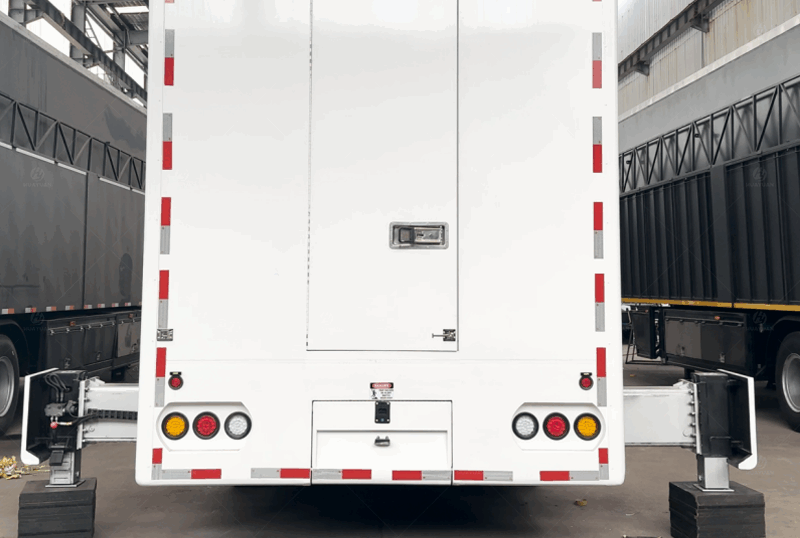
2) Stage Deck Surface
Step on the four corners of the platform and the panel joint areas. Confirm that there is no looseness, lifted edge, or obvious abnormal noise.If the deck surface is loose, the edge is lifted, or clear abnormal noise is heard when stepping on it, stop use and recheck the equipment.
3) Wing Panel Condition
After the wing panels are in position, check the edges on both sides. Confirm that there are no signs of collision or scraping.Check that the joint between the wing panels and the roof is properly aligned, with no obvious gap or misalignment.The left and right sides should remain consistent. There should be no obvious tilt or uneven positioning.If the panels are difficult to move into position, or if interference, collision, or abnormal shaking occurs, stop operation and recheck the equipment.
4) Roof Condition
After the roof is in position, check the overall stability and the condition of the connection areas. Confirm that there is no abnormal shaking or obvious displacement.If the roof shakes noticeably or the connection areas show abnormal conditions, stop operation and recheck the equipment.
5) Safety Pins and Locking Points
Confirm that each safety pin is fully inserted and visually checked. The safety pins should move in and out smoothly, and should not become loose after being inserted.At the same time, check all structural locking points, such as latches and locking slots. Confirm that they are fully closed and properly seated.
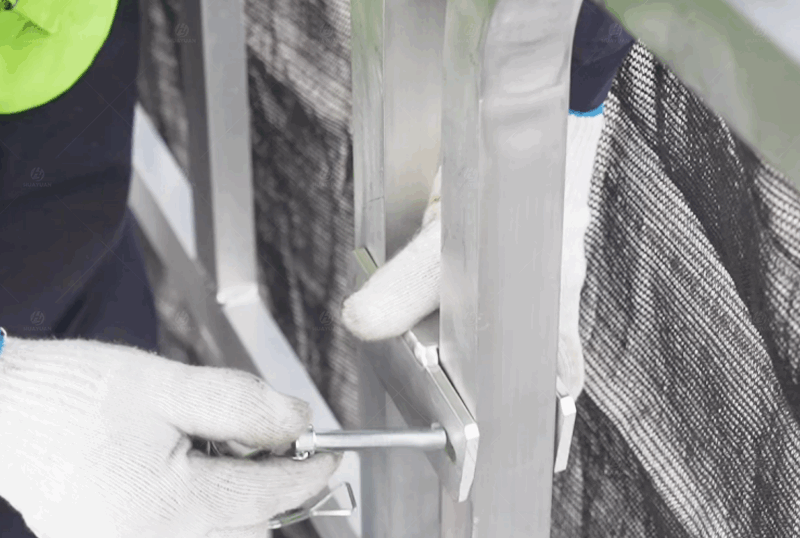
6) Guardrails and Stairs
Push the guardrails and stairs by hand to check their fixing points. Confirm that all connectors are complete and that there is no abnormal movement.If any fixing parts are missing, any connections are deformed, or abnormal shaking is found, stop use and recheck the equipment.
7) Cables and Vehicle Body Exterior
Check the cable jacket and cable routing path along the full route. Make sure the cables are not pressed, pinched, or worn through.If any cable is damaged, clearly flattened, or pinched, stop use and recheck.Also check whether the vehicle body or equipment enclosure has any risk of water ingress, abnormal heating, or burning smell. If any of these conditions appear, stop use and recheck immediately.
8) Hydraulic System(When included in the equipment configuration)
Check whether there are any new leakage marks around hydraulic components.During movement, confirm that the hydraulic actions are smooth, with no obvious jamming or unsynchronized movement.If leakage expands, movement becomes abnormal, or the control response is not normal, stop operation and recheck the equipment.
Additional Checks Before and After Transport(Recommended)
Before and after transport, focus on three types of issues:
Whether any safety pins or accessories are missing or deformed
Whether new scraping or collision marks appear near movable parts
Whether cables show new pressure marks, abrasion marks, or pulling marks
Pre: No Information
Next: No Information