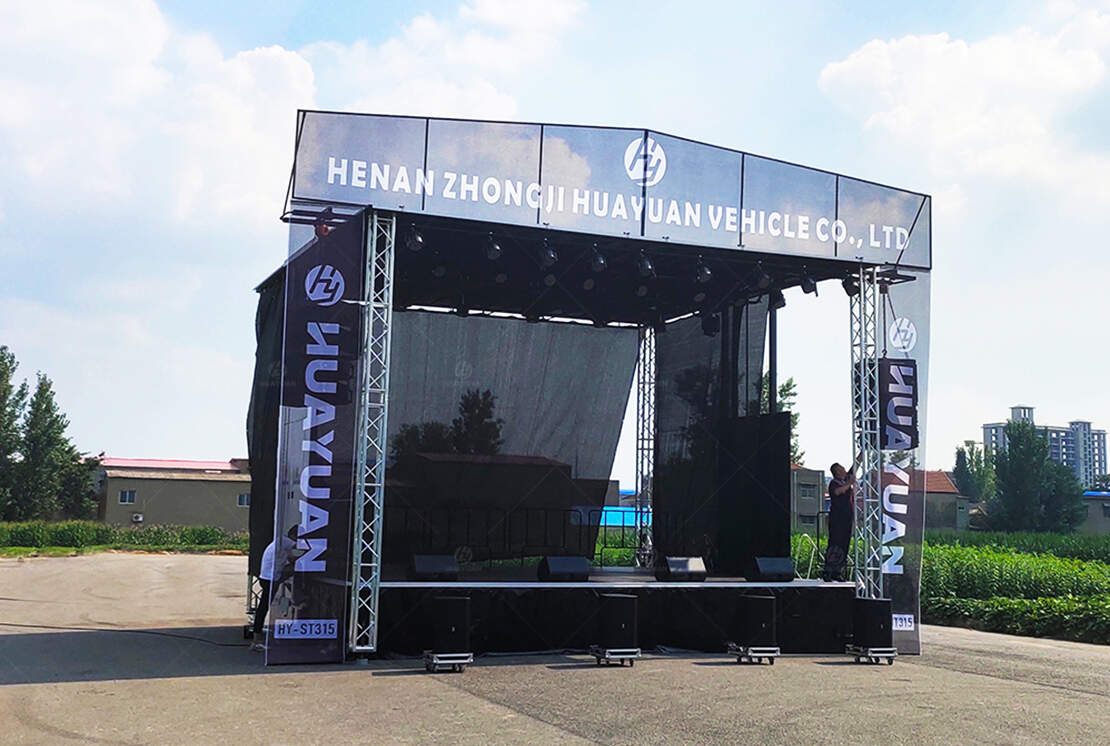
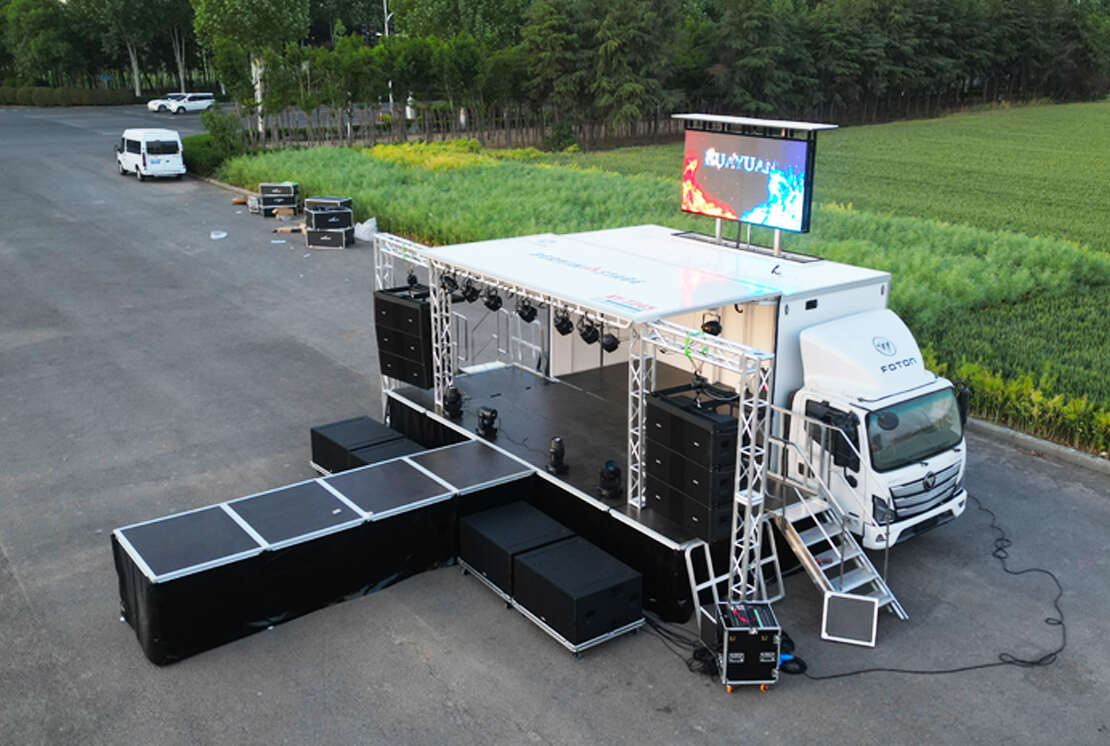
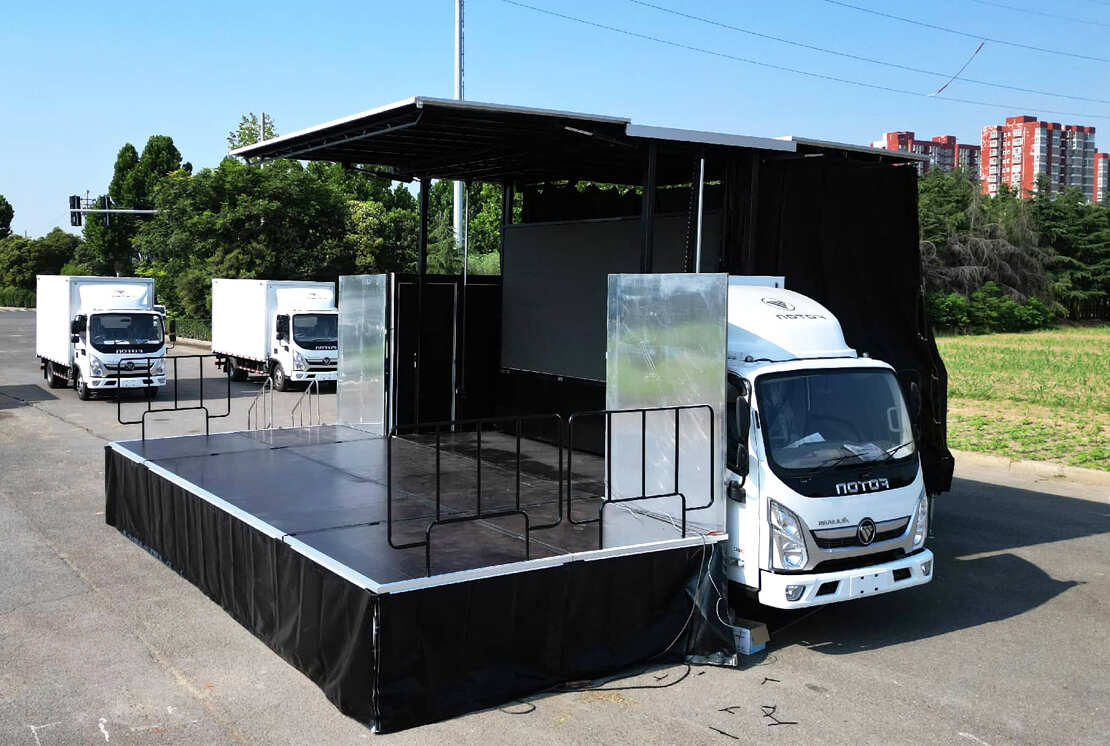
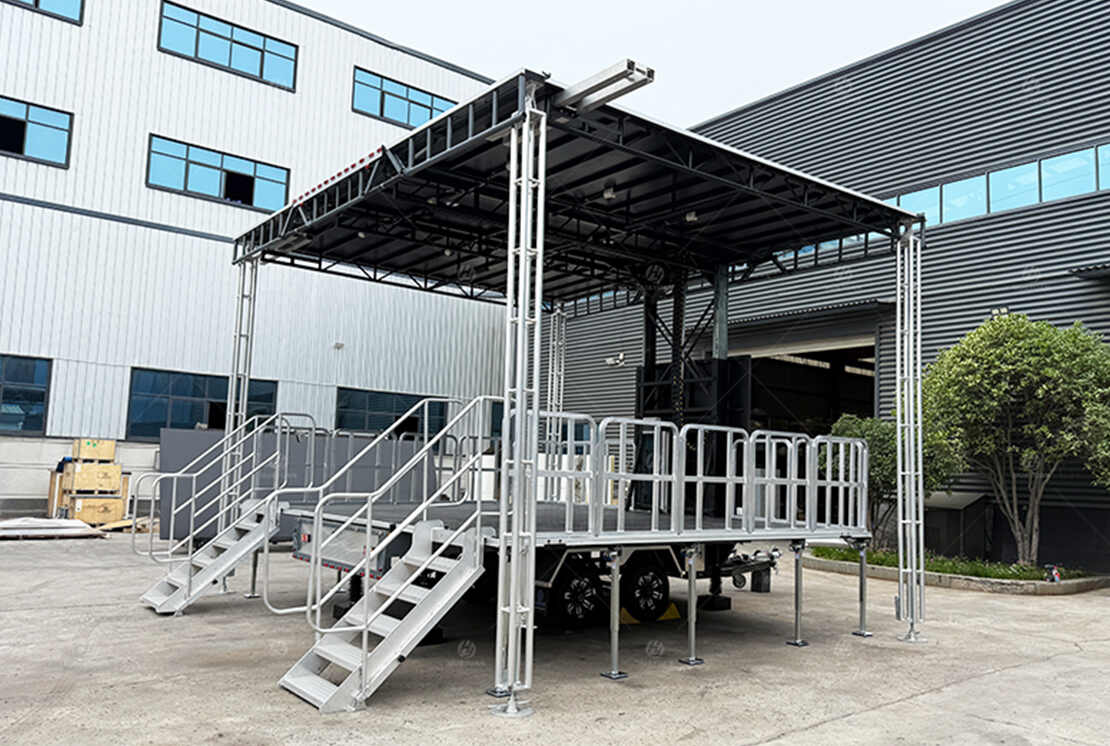
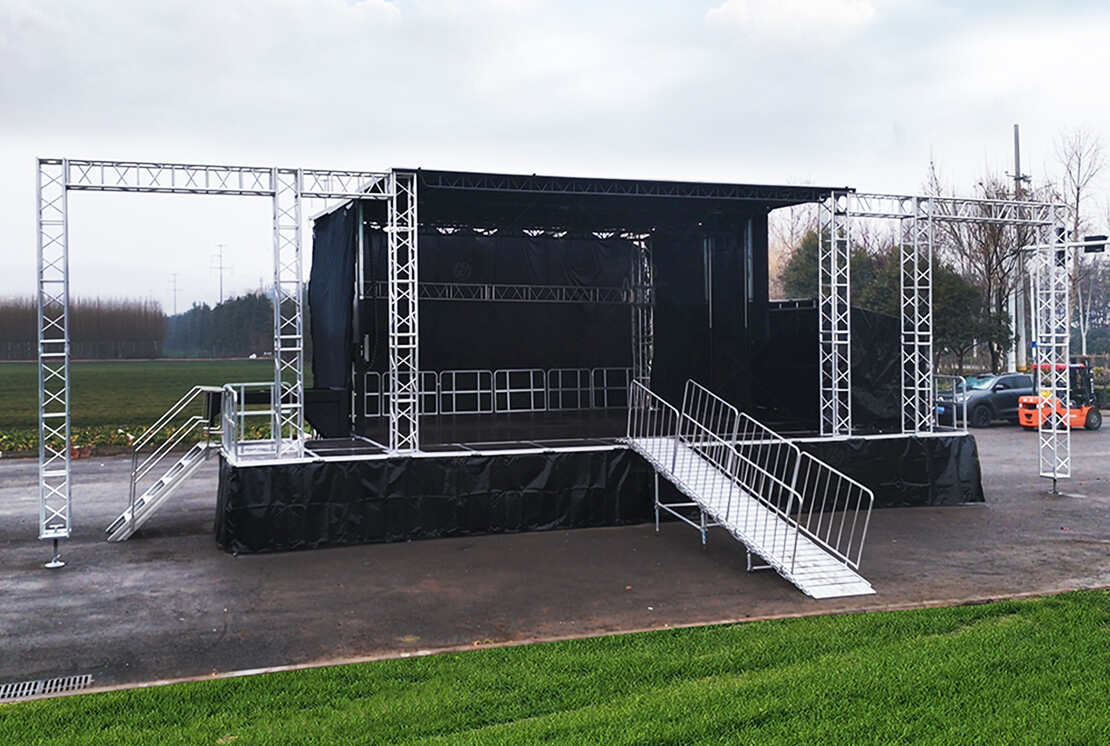
Located in Shanghai, China, this project served an outdoor themed performance and public entertainment event for a major cultural tourism venue operator.The site was a high-traffic public area. Audience circulation, viewing experience, and equipment placement all had to be managed within limited space. For the execution team, the main concerns were clear pedestrian flow, controlled working boundaries, and a technical area that would not interfere with public access.
For this project, the client used the ST345P expandable mobile stage. An LED screen was configured for performance content and visual presentation.The lighting system used performance-grade stage lighting, with a focus on even coverage across the expanded stage area. The audio system used a medium-to-large sound reinforcement setup to cover the front stage area and the main audience zone.Power was supplied by the venue’s fixed power source, with a professional event distribution system used for on-site power management.
Site Constraint: High Pedestrian Flow Planning
In a high-traffic public venue, audience routes and technical zone boundaries must be confirmed before equipment placement begins.Once the pedestrian flow is disrupted, audience access becomes harder to manage, and the technical area is more likely to be squeezed by the crowd.
The site team first planned three key lines:Main audience access route、Audience viewing boundary、Technical working boundary.
With these boundaries confirmed, equipment placement could move forward without taking over the main public access areas.
Value of the Expanded Stage Space
The expanded stage structure provided more margin for technical placement and helped keep the audience boundary more stable.The execution team could keep the technical area more concentrated, while still reserving enough space for audience movement.This made it easier to maintain order in a high-traffic area and reduced the need for temporary on-site adjustments.
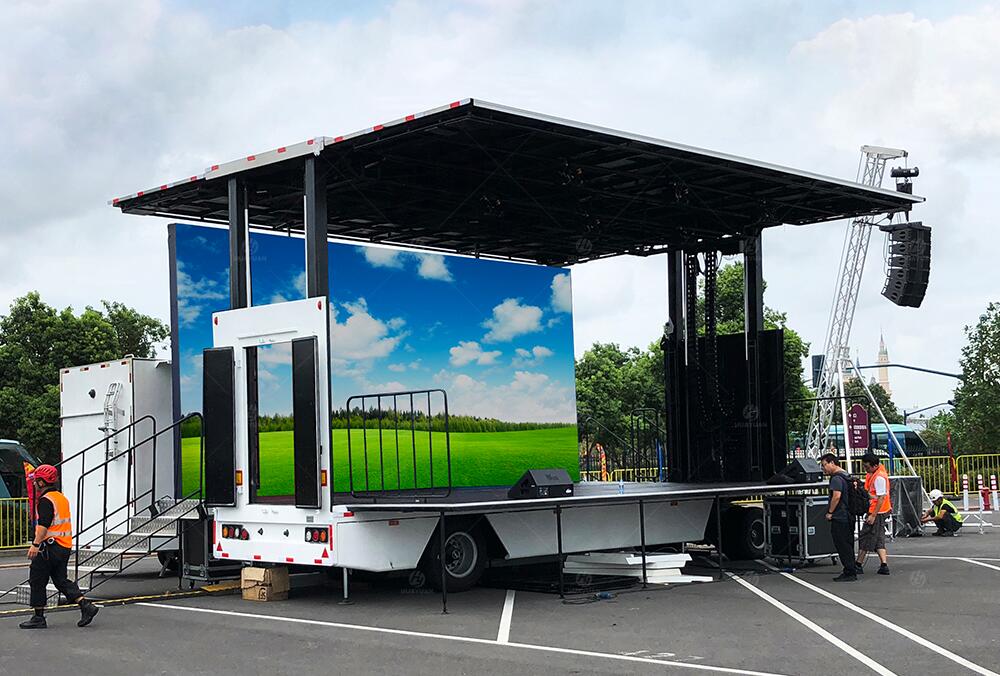
Expansion Direction and Deployment
After arrival, the crew first confirmed the expansion direction. The operator then completed hydraulic deployment by remote control and moved the expandable structure into position.Once the locking points were checked, the team continued with LED, lighting, and audio placement. Before the performance started, power-on inspection and basic system testing were completed.
Deployment was usually organized by 2–3 people, with hydraulic opening completed in about 45 minutes. This time remained stable because the expansion direction was clear, the technical zone was fixed, and cable routing did not need to be reorganized repeatedly.
Power Supply and Cable Routing
The venue’s fixed power source provided a stable supply, but cable routing still had to be contained within the technical layout zone to reduce crossings over public access routes.The site team placed the distribution point on one side of the technical area and kept the cable routes concentrated within the technical zone. Crossings over pedestrian paths were kept to a minimum.When a crossing was unavoidable, the crew secured the cables with anti-trip protection and placed the crossing point in a visible location whenever possible. This helped reduce the risk of stepping damage or loose cables, while making on-site inspection easier.
Client Feedback
The expandable stage design gave us much greater flexibility in planning audience flow and technical layout within a high-traffic environment.
Pre: ST345S Mobile Stage Trailer | Large Performance System Deployment in Boca Raton, USA
Next: S455 Mobile Stage Semi-trailer | Multi-day Outdoor Worship Event in Kampala, Uganda