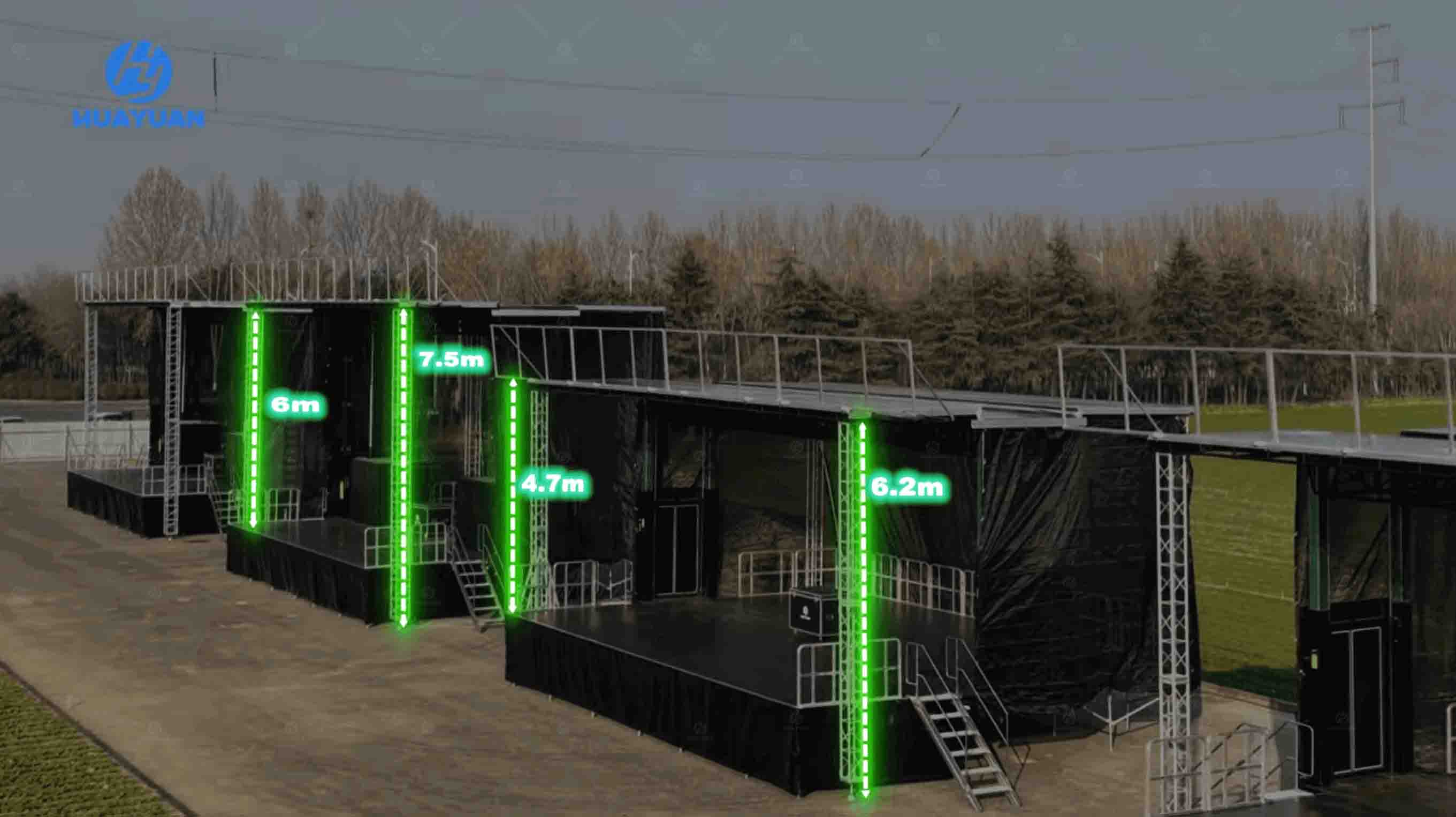
Mobile stage roof height refers to the vertical distance between the finished stage floor and the underside of the main roof structure after the stage has been fully deployed.
Unlike transportation height or overall vehicle height, roof height describes the usable space available beneath the roof. This measurement is important for planning lighting, suspended audio equipment, stage decoration, and performer clearance.
Depending on the roof design, manufacturers may measure roof height from the stage floor to the main roof truss or another specified structural member. Understanding the measurement reference helps ensure accurate comparison between different mobile stage systems.
Roof height is a key engineering parameter because it directly influences the working space inside a mobile stage.
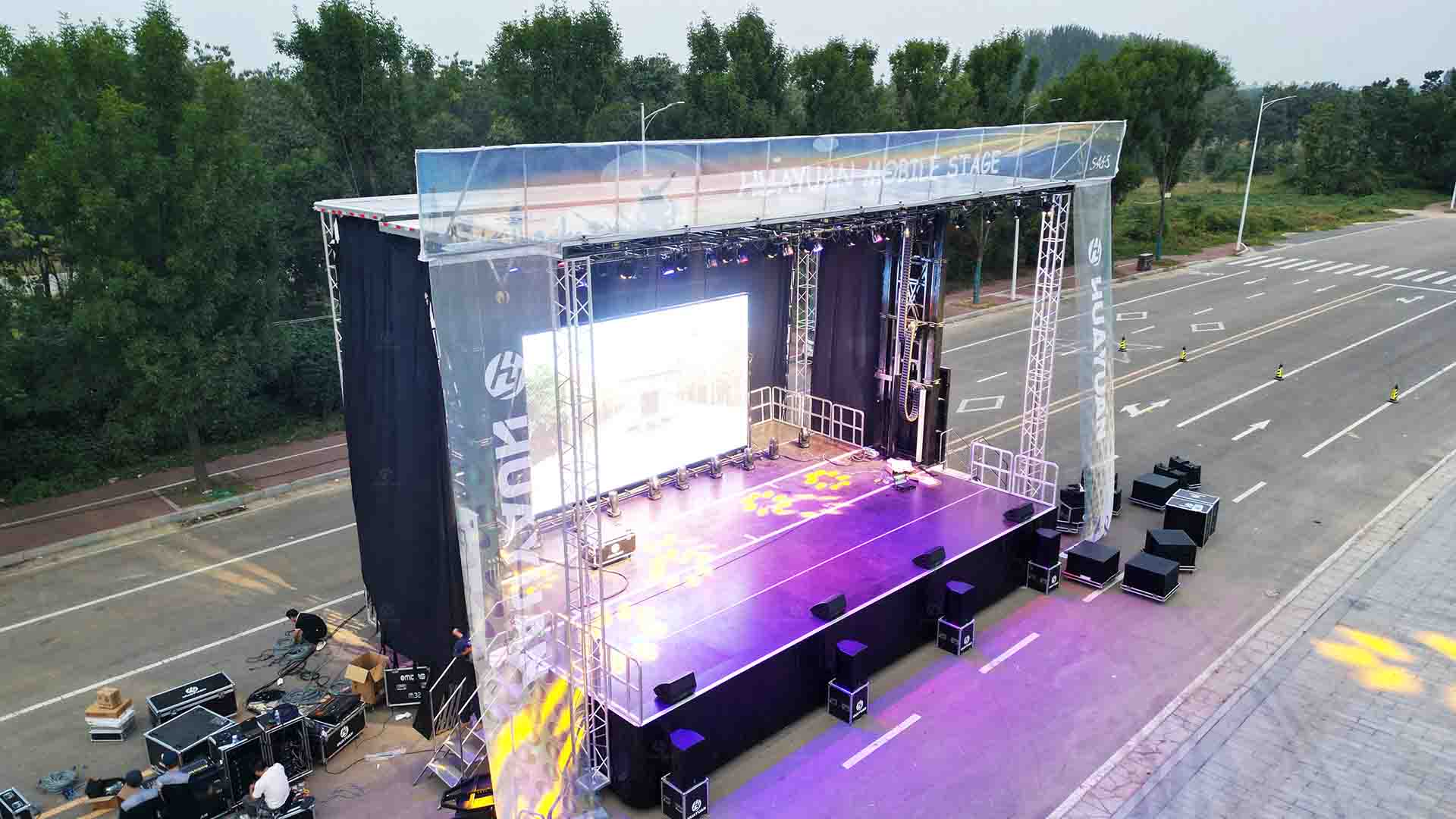
Sufficient vertical clearance provides room for lighting fixtures, suspended speaker systems, stage decorations, banners, and production equipment. It also affects performer movement and the overall visual proportion of the stage.
However, roof height alone does not determine stage capability. The available space beneath the roof also depends on the roof truss design, lighting bars, suspended equipment, and structural members that occupy the overhead area.
Therefore, roof height should always be considered together with the overall roof system rather than as an isolated specification.
Roof height is determined during the engineering design of the mobile stage rather than being selected as a standalone dimension.
Several factors influence the final roof height, including:
1.Vehicle or trailer structure
2.Hydraulic lifting system
3.Roof truss configuration
4.Folded transportation dimensions
5.Structural stability requirements
6.Space required for lighting and audio equipment
Because mobile stages must remain transportable while providing sufficient operating space after deployment, engineers balance transportation limitations with structural performance and equipment installation requirements.
The hydraulic lifting system, roof structure, and support mechanism work together to achieve the designed roof position while maintaining structural integrity.
Roof height is closely related to several other technical specifications, although each parameter describes a different aspect of the mobile stage.
Roof Load Capacity
Roof height defines the available vertical space, while roof load describes how much suspended equipment the roof structure can safely support. A higher roof does not automatically provide a greater load capacity.
Wind Resistance
As roof height increases, the overall roof system may experience different wind conditions. Wind performance depends on the complete structural design, support system, and operating conditions rather than roof height alone.
Lighting and Speaker Systems
Lighting fixtures and suspended speaker arrays require adequate installation space beneath the roof. Their final positions are influenced by roof height, roof truss depth, and rigging arrangements.
Stage Dimensions
Roof height should always be considered together with stage width and depth to achieve a balanced working space and suitable equipment layout.
How is mobile stage roof height measured?
It is generally measured from the finished stage floor to the underside of the primary roof structure after deployment.
Is roof height the same as transportation height?
No. Transportation height describes the folded vehicle, while roof height describes the usable space beneath the deployed roof.
Does a taller roof support more equipment?
No. Equipment capacity depends on roof load ratings and structural design.
Can roof height be customized?
It can be engineered according to project requirements, provided the complete roof structure, hydraulic system, transportation limits, and safety requirements are considered together.
Why do similar mobile stages have different roof heights?
Differences in chassis design, roof structure, hydraulic systems, and intended applications can all influence the final roof height.
Mobile stage roof height is a fundamental structural parameter that defines the usable vertical space beneath the deployed roof. It influences lighting installation, speaker suspension, equipment clearance, and the overall functionality of the stage.
Rather than evaluating roof height as a single specification, it should be understood together with roof structure, roof load capacity, hydraulic lifting systems, wind resistance, and overall stage design. Understanding these relationships provides a clearer interpretation of mobile stage specifications and supports more accurate technical evaluation.