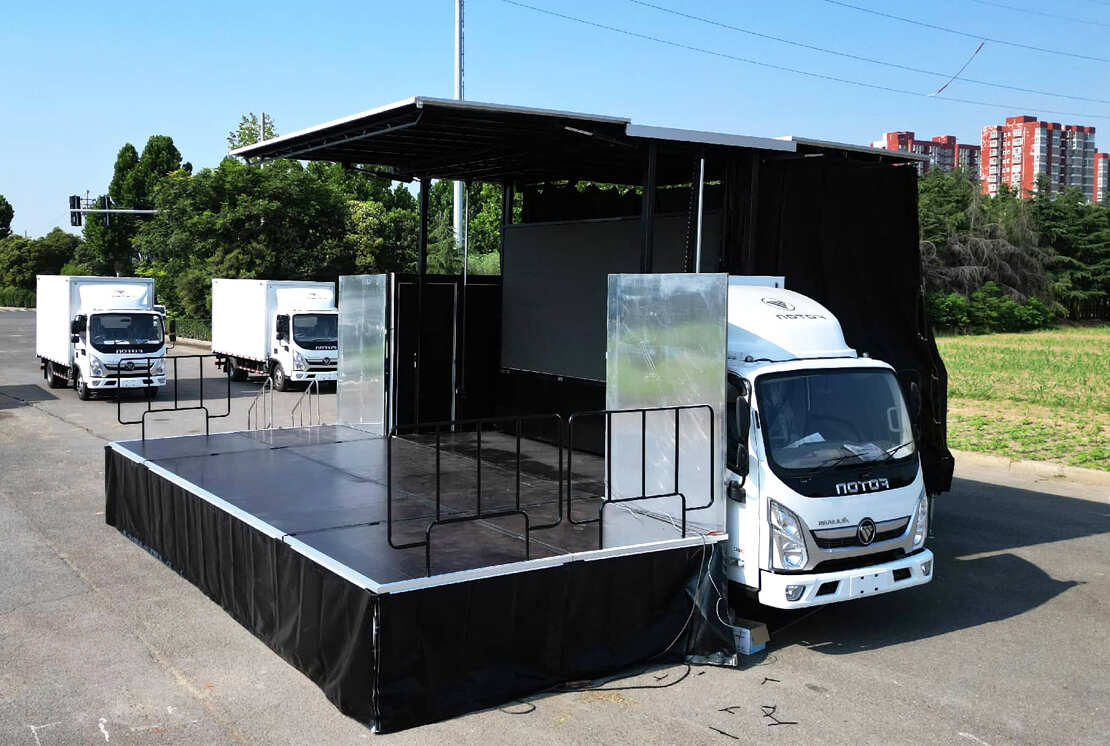
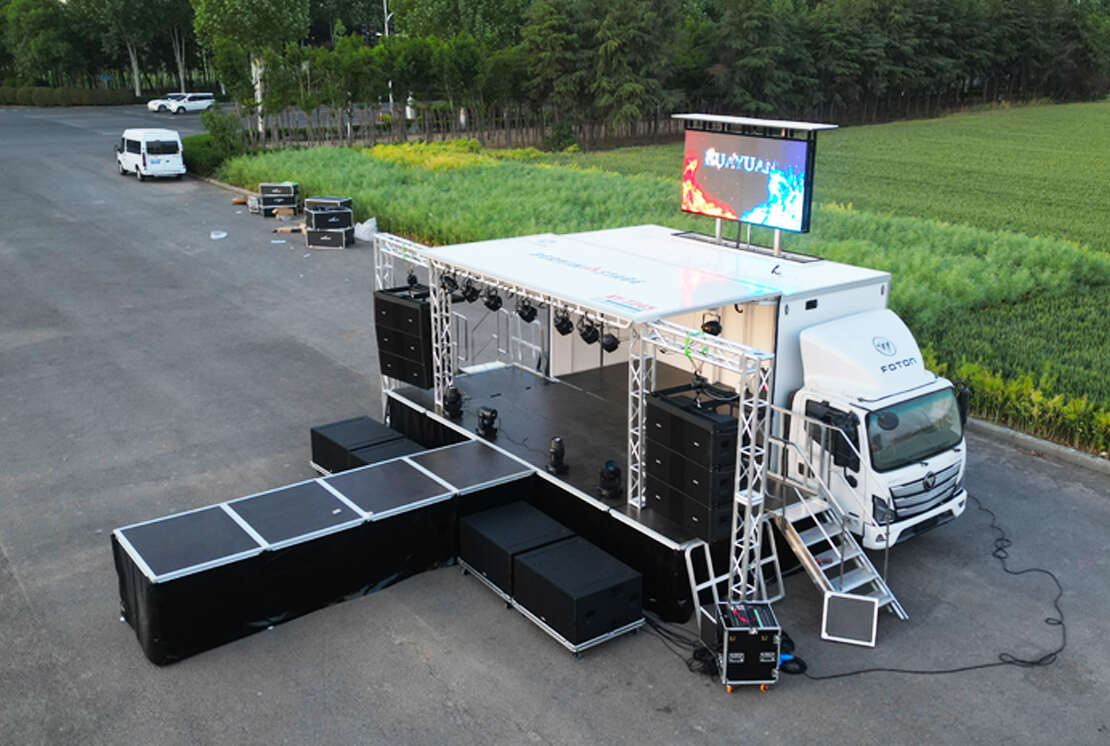
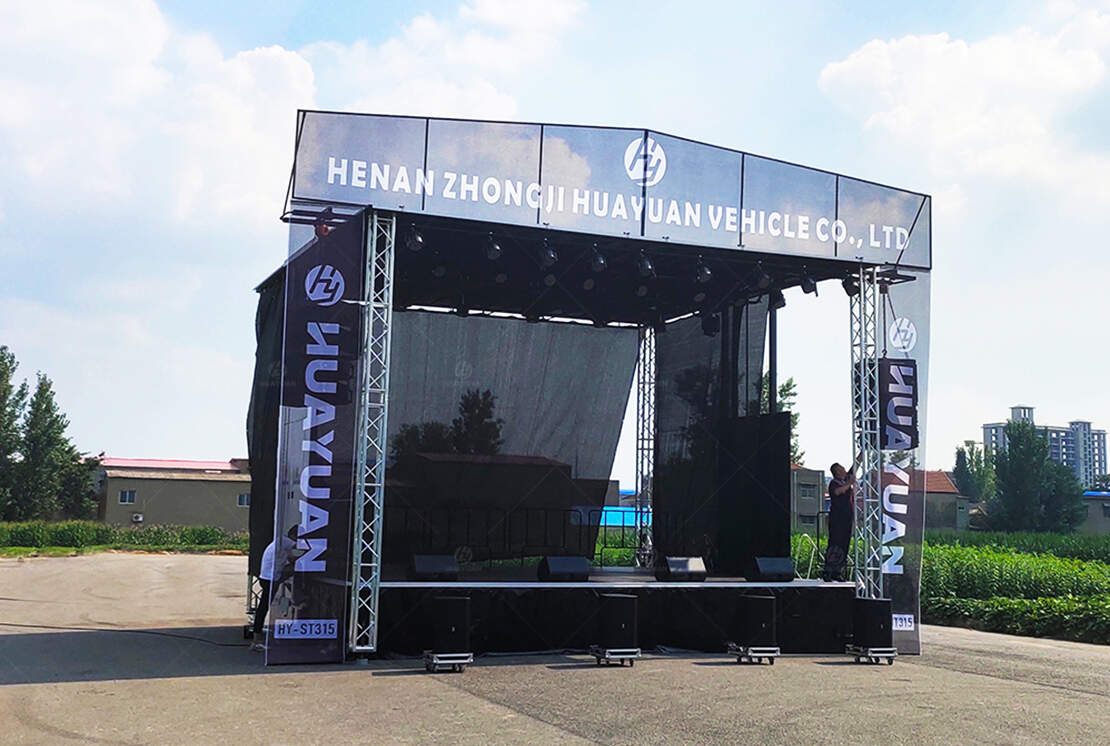
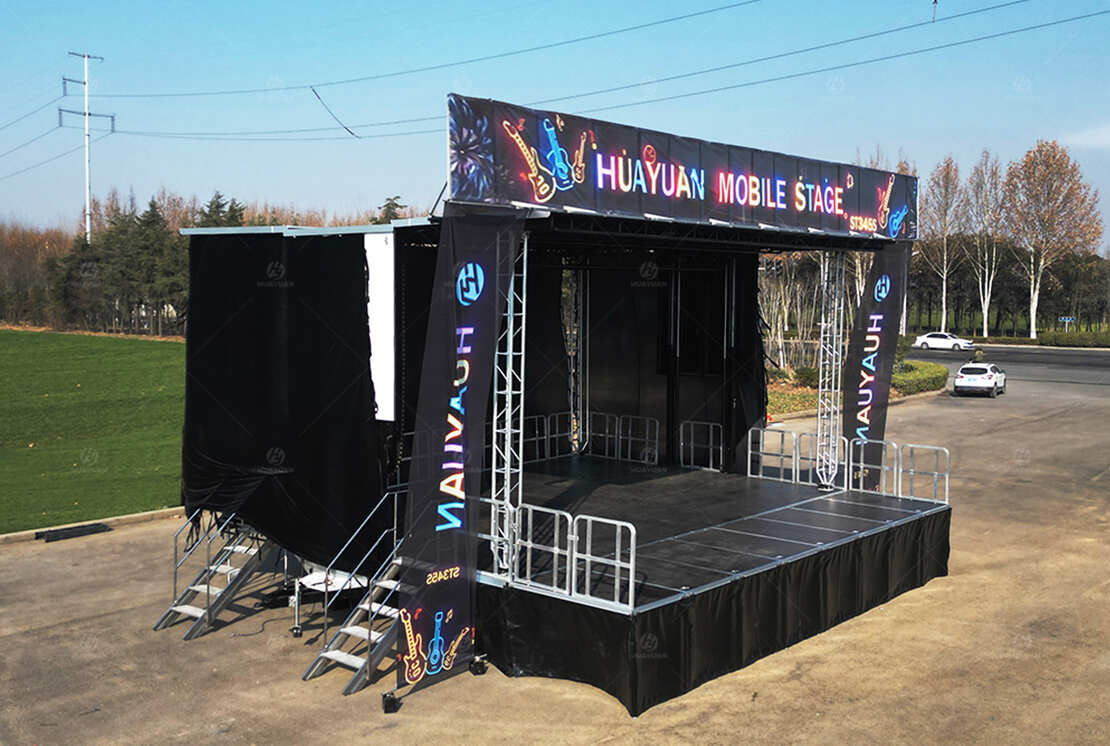
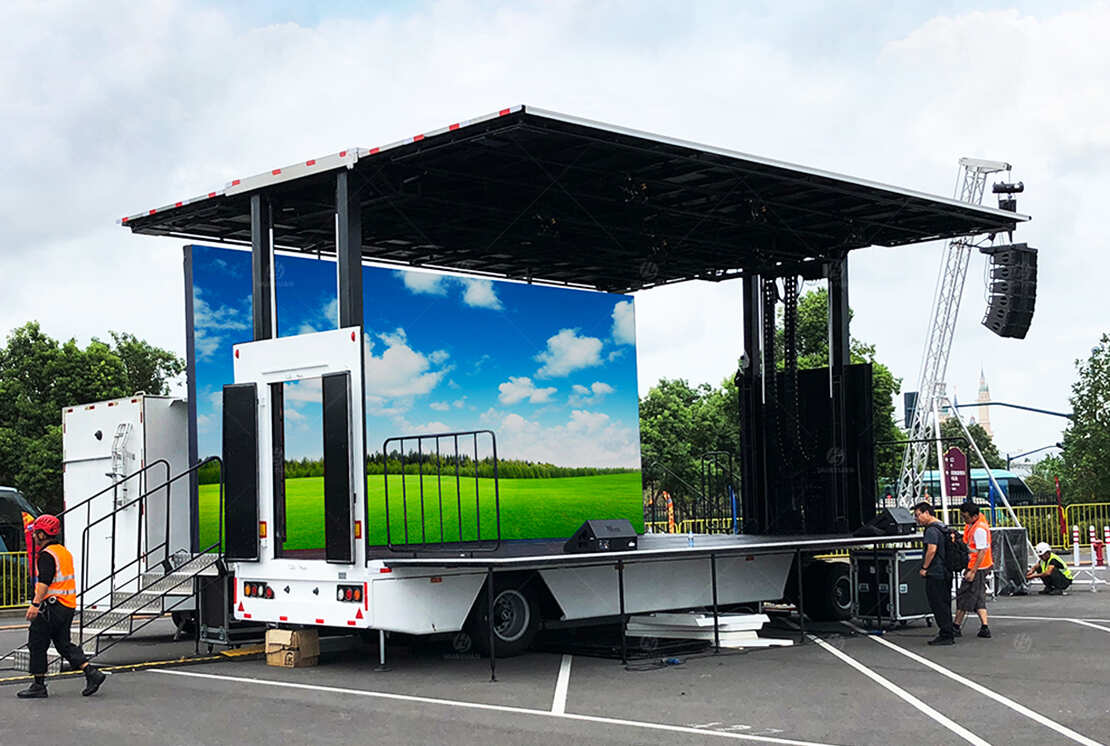
When choosing a mobile stage type, trailers, trucks, semi-trailers, and container-type stages each have their own application boundaries.A more stable approach is not to start with stage size, but to confirm the key project constraints first.
The clearer the key constraints are, the more stable the model selection will be.
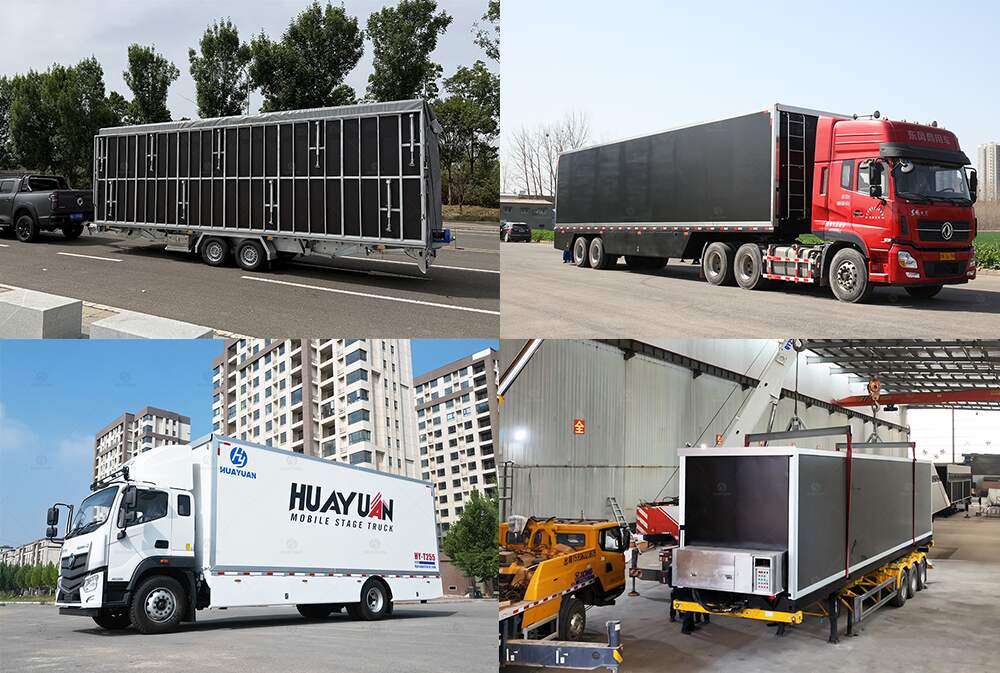
This article uses five constraints to help you quickly judge the right type direction:
access and road use, site and route conditions, deployment window and manpower, system complexity, and usage frequency.
Check These Five Constraints Before Choosing Trailer / Truck / Semi-trailer / Container-type Stage
1) Access and Road Use Boundaries
Different markets or projects may have restrictions on vehicle registration, import procedures, and road use.
Before selecting a type, first confirm the target market’s requirements for vehicle format and document scope.
If the project requires document support, the document list and confirmation process should also be aligned in advance.In cross-border projects, some countries may have restrictions on complete vehicle equipment, such as trucks, trailers, and semi-trailers, in terms of import, registration, or road use.In this case, a container-type stage can enter the target market through a standard cargo transport route, helping reduce uncertainty in customs clearance and transport.
2) Site and Route Conditions
Check whether the entrance width, turning points, slopes, height limits, and deployment area are clear.
These conditions determine whether the equipment can enter and position smoothly. They also affect the difficulty of on-site organization.
3) Deployment Window and Manpower
The project needs to confirm the available deployment time window and the expected number of operators.
The tighter the time window, the more important it is to keep on-site variables within a controllable range.
4) System Complexity
The project needs to confirm the system complexity and layout space requirements.
The more complex the system is, the higher the requirements for layout space and on-site organization.
5) Usage Frequency and Relocation Rhythm
A one-time event, multiple event stops, continuous multi-day use, and frequent relocation all create different organization costs.
The higher the usage frequency, the higher the repeated cost. Type selection therefore needs to be more stable.
What Each Type Is More Suitable For
Trailer(Towed Type)
A trailer is more suitable for projects that require flexible scheduling and can reliably organize towing and parking.
Trailer stages usually depend more on the towing vehicle and parking space. The project should confirm in advance whether the entrance and deployment area are sufficient.
Truck(Vehicle-mounted Type)
A truck stage is more suitable for projects that emphasize arrival efficiency and aim to reduce external scheduling steps.
Truck stages are usually more direct in dispatching and on-site organization, making them suitable for standardized execution workflows.
Semi-trailer(Tractor + Semi-trailer Platform)
A semi-trailer stage is more suitable for projects with higher requirements for load-bearing base, layout space, and system complexity.
The project should confirm route and site entrance conditions earlier, and align road access and document requirements in advance.
Container(Container-type Stage)
A container-type stage is more suitable for projects restricted by transport and customs clearance conditions, or projects that require a standardized transport route.
In some countries, container-type stages can be transported and cleared as regular cargo, without involving vehicle registration or road-use requirements.
It is suitable for cross-border transport, fixed or semi-fixed venues, and application scenarios with higher requirements for structural stability.
Three Common Selection Mistakes
1) Choosing the Type Before Confirming Access Requirements
Many projects choose a format based on instinct first, only to find later that the target market has additional requirements for registration, import, or road use.
A more stable sequence is to confirm the access boundary first, then compare solutions.
2) Ignoring Towing / Driving and On-site Resources
Trailers and semi-trailers both depend on towing and driving organization. Truck stages depend on vehicle and personnel dispatching.
When the resource organization method does not match the project, on-site efficiency will be reduced.
3) Looking Only at Stage Size, Not Access and Positioning Difficulty
Stage area is the result. Entrance width, turning points, slopes, and deployment area determine whether the equipment can actually be positioned.
These conditions decide whether the project should lean toward a certain vehicle format.
Quick Review
Before choosing a type, check five constraints first:
Access and road use, site and route conditions, deployment window and manpower, system complexity, and usage frequency.
Trailer stages depend more on towing and parking organization.
Truck stages focus more on arrival and on-site execution efficiency.
Semi-trailer stages are more suitable for projects with higher system complexity.
Container-type stages are more suitable for projects restricted by transport and customs clearance conditions.
If you already have your own idea about the stage format or on-site organization, you can directly describe the application scenario, site restrictions, and target effect.Our engineers can then provide more suitable type recommendations and solution directions.Start Your Customization