Whether you’re planning a music festival, government event, roadshow, community gathering, or promotional campaign, choosing the right power solution is just as important as selecting the right mobile stage.
Many event organizers ask, “Should we use a generator or connect to shore power?” The answer depends on the project itself. Venue conditions, event duration, power demand, environmental requirements, and operating costs all influence the best choice.
Instead of focusing on the equipment first, evaluate your project’s actual power requirements.
Generator
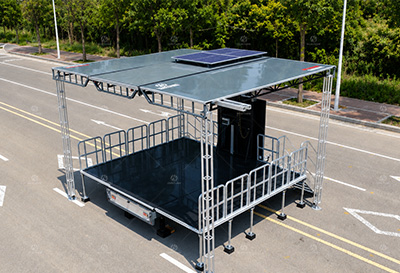
Solar-Assisted
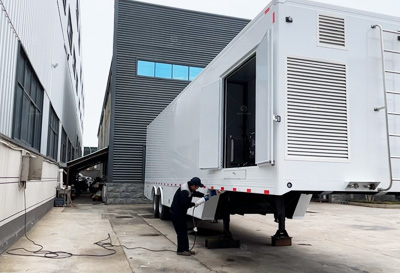
Shore Power
A mobile stage relies on electricity for more than lighting and sound. Depending on the project configuration, electrical power
may also be required for hydraulic operation, LED displays, audio systems, lighting equipment, and other auxiliary devices.
Selecting an appropriate power solution helps ensure reliable stage deployment, stable equipment operation,
and efficient event management from setup to breakdown. Considering power requirements early in the planning
process can also improve operational efficiency and reduce unexpected challenges on site.
Before choosing a power solution, consider a few practical questions:
Is utility power available at the venue?
Will the stage remain at one location or travel between multiple sites?
Are there local restrictions on noise or emissions?
How many hours will the event operate each day?
What equipment will require electrical power?
Answering these questions provides a solid foundation for selecting the most suitable power solution.
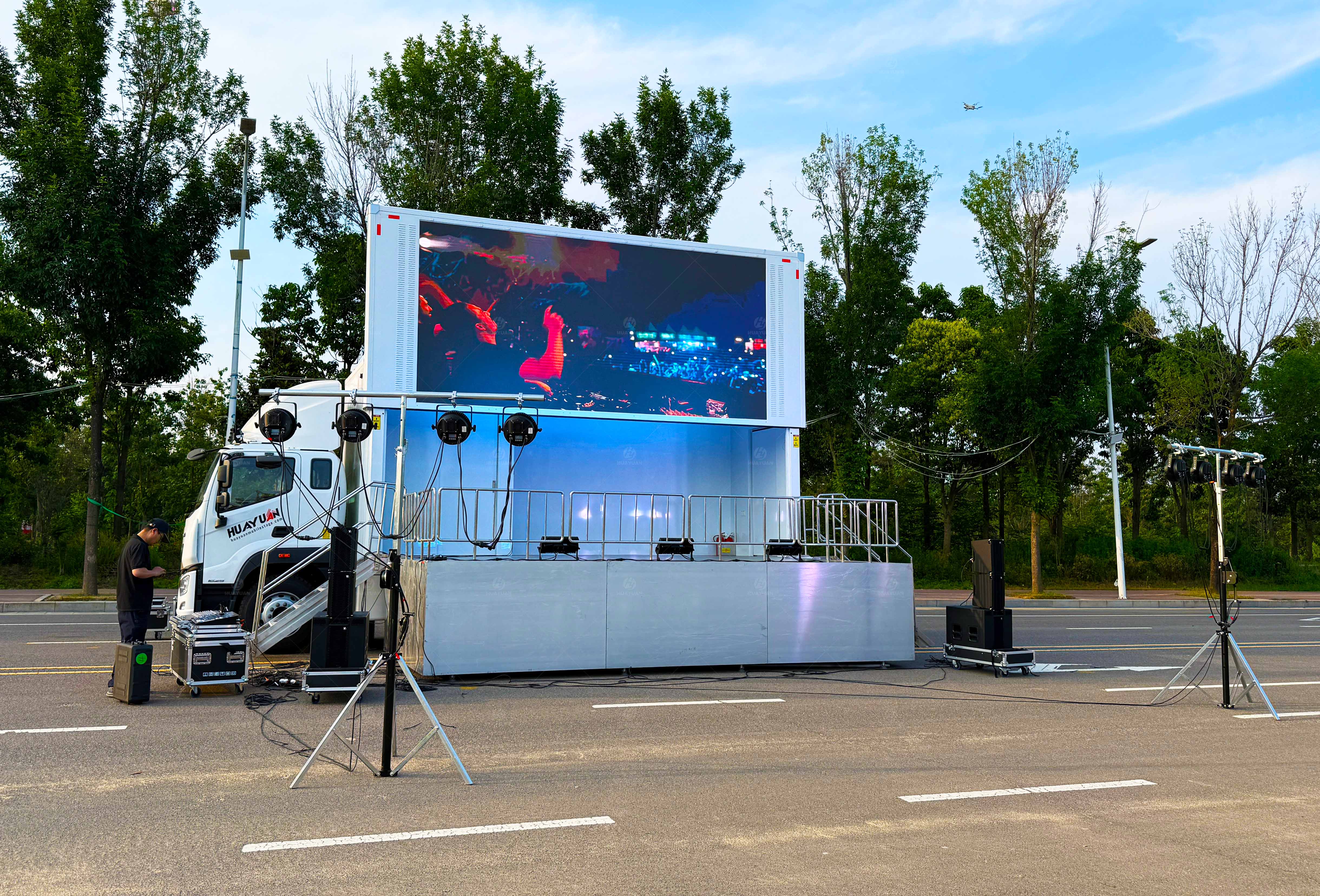
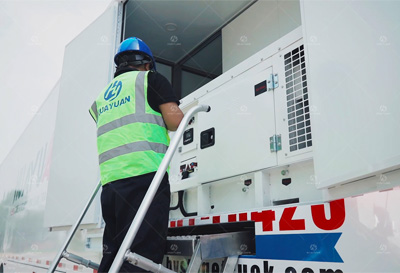
Generators remain an excellent solution for projects where utility power is unavailable.
They are widely used for festivals, rural events, temporary venues, emergency operations, and touring productions. Their greatest advantage is independence from local electrical infrastructure, allowing events to be organized almost anywhere.
Modern generators provide reliable performance for a wide range of applications. During project planning, it is simply important to consider factors such as fuel supply, operating environment, routine maintenance, and local noise regulations, particularly for long-duration events or urban locations.
Where reliable utility power is available, shore power is often the most economical and convenient option.
It is well suited for city squares, exhibition centers, stadiums, convention centers, and other venues with permanent electrical infrastructure. Compared with generator-based operation, shore power can simplify event logistics, reduce operating costs, and provide a quieter working environment.
For projects that remain at a single venue, connecting to the local power supply is often the most practical choice.
As sustainability becomes a greater priority across the event industry, solar-assisted mobile stages are gaining attention for selected applications.
Unlike conventional systems that rely entirely on generators or utility power, solar-assisted designs can help reduce fuel consumption by supporting hydraulic operation and auxiliary electrical systems under suitable operating conditions.
For example, the HUAYUAN ST180S Solar Mobile Stage Trailer combines solar panels with battery storage to provide an additional energy source. While it is not intended to replace the main power supply for high-power equipment such as professional lighting, LED displays, or sound systems, it can improve energy efficiency and reduce dependence on traditional power sources for compatible applications.
Comparing Three Common Power Solutions:
| Evaluation Factor | Generator | Shore Power | Solar-Assisted |
|---|---|---|---|
| Utility power required | No | Yes | Optional |
| Mobility | Excellent | Depends on venue | Good |
| Operating noise | Moderate* | Very Low | Silent |
| Fuel consumption | Required | None | Reduced |
| Operating cost | Medium | Low | Low |
| Best suited for | Remote and temporary events | Fixed venues | Sustainable or low-power applications |
*Modern silent generators can significantly reduce operating noise, making them suitable for many commercial and public event environments.
There is no single power solution that fits every mobile stage project. The best choice depends on the venue, operating conditions, electrical demand, event duration, and overall project objectives.
Before making a final decision, consider the following:
By evaluating these factors early in the planning process, event organizers can select a power solution that supports reliable operation, efficient deployment, and long-term project success.
If you’re unsure which option best suits your project, the HUAYUAN team can help recommend an appropriate power solution based on your event requirements, venue conditions, and equipment configuration.
Pre: Why Is Setup Time So Often Misestimated?
Next: How Project Requirements Shape Mobile Stage Configuration